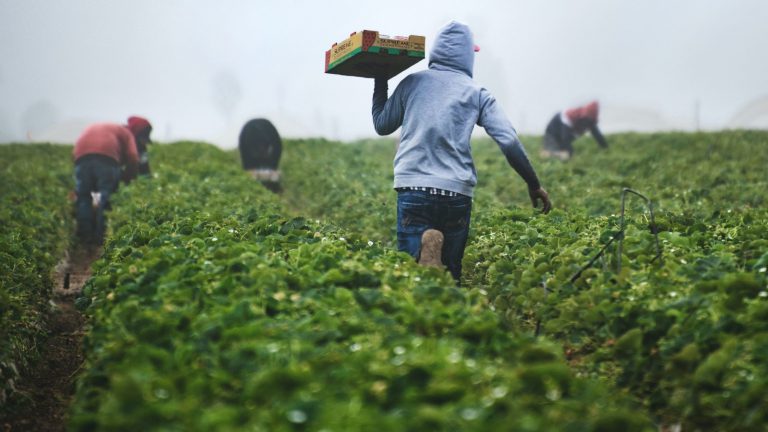
Ask anyone working on food and farming what needs to be happening, and you’ll hear familiar answers: healthier and more accessible diets, resilient farms and food workers, smarter land use. The consensus is striking. What’s missing isn’t agreement on the destination but attention to one essential element that makes the journey possible: justice. The updated EAT-Lancet Commission makes a compelling case that without addressing who shapes change, who benefits, and who bears the costs, even the best-laid plans will struggle to gain traction.

The symptoms of a food system shaped without adequate input by those most affected are well documented: food insecurity, widening health inequalities, and a farming sector under strain. Who gets to shape the response is less discussed. The communities most affected by the current system remain largely absent from the spaces where change is planned. That gap isn’t only an injustice in itself—it helps explain why food systems transformation keeps stalling.
What if the journey needs justice?
For years, justice in food systems has been framed primarily as a destination that we reach once transformation is complete. The results should include fairer outcomes, more equitable access, and a better distribution of benefits and burdens. And these remain essential goals. But the EAT-Lancet 2025 report marks a significant shift in emphasis: justice is not only what we’re working towards, but what makes transformation possible in the first place.
Power imbalances engender resistance
The logic is straightforward: changes that ignore power imbalances generate resistance. Without genuine participation, we will struggle to build the coalitions needed for implementation. And technical solutions, however elegant, fail politically when affected communities see themselves as subjects of policy rather than shapers of it. This is why transformation keeps stalling—not for want of evidence or ideas, but because we haven’t fully prepared for the journey.
EAT-Lancet identifies three interconnected justice dimensions
EAT-Lancet frames this through three interconnected dimensions of justice.
- Distributive justice concerns who receives benefits and who bears costs, that is, the fair allocation of resources, opportunities, and burdens.
- Representational justice asks who has power in decision-making and whether processes are fair, transparent, and genuinely inclusive.
- Recognitional justice addresses whose knowledge, identities, and values are respected, and considers whether all affected communities participate as equals, or if dominant framings marginalize certain voices before the conversation even begins.
This three-dimensional framing follows a path laid by earlier work. The Food Ethics Council’s 2010 Food and Fairness Inquiry captured much of the distributive and representational ground. What EAT-Lancet adds, and what 15 years of thinking has sharpened, is the explicit recognition that how people are seen and valued shapes whether they can meaningfully participate at all. This is a significant evolution in this framework. Through my work with the AFN Network, which developed the Roadmap for Resilience, we’ve been testing how these frameworks apply to UK food system pathways, and we think there’s another dimension that deserves attention.
A fourth justice dimension
This fourth dimension is restorative justice. Transformation doesn’t happen on a blank slate. It happens in places with histories of extraction, marginalization, and broken promises. The communities being asked to change have often been harmed by the very systems now deemed unsustainable. Restorative justice asks what past harms need to be acknowledged and addressed, and whether there are mechanisms for repair, redress, and accountability. Without this dimension, calls for transformation can feel like yet another imposition on communities that have already seen too many. This is a dimension we’re now building into AFN work, applying justice frameworks to UK food system pathways.
Grounding justice in the specifics of transformation
These ideas need to be grounded in the specifics of what transformation actually requires. The Roadmap for Resilience, developed by the AFN Network, identifies three interconnected transformations required to build a sustainable UK food system by 2050.
- Farming needs to shift towards producing more of what we actually need—including leafy green vegetables and plant proteins like peas, beans, and legumes—while integrating livestock into systems that sustain ecosystems rather than deplete them.
- Land use must balance competing demands, with millions of hectares transitioning to support nature restoration, carbon sequestration, and food production together.
- Dietary change means redesigning food environments so that healthy options become the default.
The Roadmap takes justice seriously, emphasizing just transitions that support affected communities through structural change. It calls for meaningful participation, dedicated transition funds, and social impact assessments to track whether benefits and burdens are distributed fairly. These are important commitments.
Yet there’s an opportunity to go further. The Roadmap addresses justice primarily as something to manage well during transformation. What would these pathways look like if justice had been positioned as the catalyst from the start?
If justice were the starting point
To test these ideas, the AFN Network recently convened farmers, community food practitioners, policymakers, and researchers to examine the Roadmap through a justice lens. The findings are preliminary, but several patterns emerged that go beyond identifying who’s missing from the conversation.
What to get straight before we start
Participants were clear that transformation can’t begin without acknowledging the past and its damaging legacy. Communities being asked to change have often been harmed by the very systems now deemed unsustainable: traditional diets dismissed, land enclosures that still shape ownership today, and extractive relationships with farming communities that span generations. Transformation that doesn’t acknowledge this history will struggle to build the trust it needs. Before asking people to participate in agendas they didn’t shape, we have to be honest about what came before.
The recognitional justice dimension proved particularly revealing. Participants identified how certain forms of knowledge get systematically devalued: farmers whose expertise is dismissed even as they manage complex ecological systems; traditional food knowledge sidelined in favour of technical solutions; dietary guidelines developed around assumptions that exclude people with disabilities. Before we can talk about fair distribution of benefits or meaningful participation, we have to ask whose knowledge even counts.
How the process excludes
Participants highlighted how the process itself creates barriers. Contributing to policy is a privilege. Farmers don’t have time to sit on working groups. Communities facing hardship can’t attend consultations scheduled during working hours in venues across town. Policy and commercial processes often move at speeds that actively exclude meaningful engagement. If our engagement process assumes that kind of availability, it’s already excluding the people who most need to shape it. Several participants emphasized the need to go to where people are, but only if we’re prepared to follow through. Asking communities what they need and then not delivering is worse than not asking at all.
We also heard a reframing that stuck with me: we need to engage people living in poverty, not “food poverty”. The distinction matters because transport, wages, and housing are the structural conditions that determine whether healthy food is even an option. Framing it as a food problem lets the system off the hook.
One participant recalled that people who’ve relied on food banks, sometimes for many years, aren’t consulted on what’s provided. Who decided it would be tinned food from supermarkets? It’s a small example that says something much bigger about who gets to define solutions.
We also noticed who isn’t in the room. Participants talked about “duty bearers”: those with the power and responsibility to act who should be held accountable but rarely show up. Their absence isn’t incidental. Accountability becomes impossible when those who should answer for the current system aren’t part of the conversation about changing it. Exclusion occurs because even when marginalised voices are brought together, the other people who need to be involved in change aren’t there to listen.
The path forward
The technical pathways for food system transformation exist, but we still haven’t done the work required on who shapes change, who benefits, and who bears the costs. The EAT-Lancet framework and the AFN’s own Justice, Equity, Decolonization, and Inclusion work suggest these aren’t just ethical concerns to address alongside transformation: they’re the conditions that determine whether transformation can happen at all.
Embedding justice in practice means more than adding participation mechanisms to existing plans. It means going to communities rather than expecting them to come to us, and then ensuring that collectively we consider whose knowledge counts, are honest about past harms before asking for trust, and are committed to taking that engagement full circle into action. It means recognizing that policy processes designed around the schedules and locations of the already-powerful will only reproduce existing exclusions.
At the AFN we’re now establishing a steering group to guide what comes next, with space for others to shape this work with us. There’s much to learn, and we’ll need to keep testing these ideas against the realities of farming, land use, and dietary change. The question we keep returning to is: what would it take to genuinely centre those most affected by our food systems, and what could that achieve?
I write about the future of food and the connections between our food systems, the environment and public health. Sign up for my newsletter.
You can also read more here.