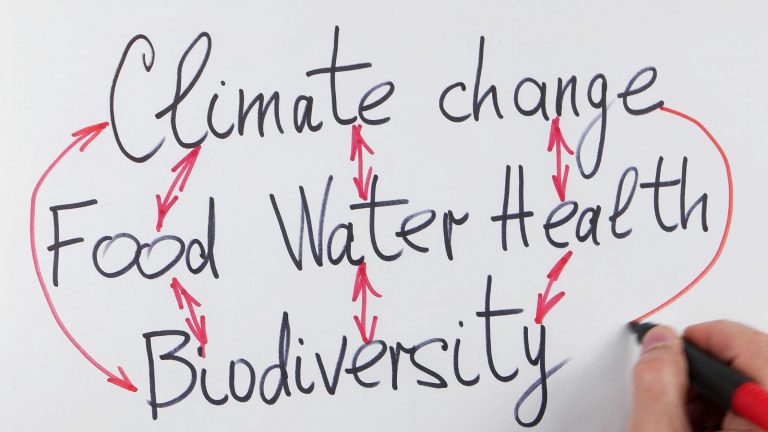
For decades, climate negotiations have treated food security as separate from emissions reduction. The Belém Declaration on Hunger, Poverty, and People-Centred Climate Action changed that. Forty-three countries plus the EU committed to putting the needs of those living with poverty and food insecurity at the centre of climate solutions. This high-level declaration represents a milestone in which a major bloc of Parties used the COP platform to assert that the climate crisis is inseparable from the crisis of inequality.

This was one of the ways that this year’s summit marked a significant evolution in how food systems are treated within international climate negotiations. Brazil made “Transforming Agriculture and Food Systems” one of six priorities for COP30, helping bring long-overdue visibility to the interconnectedness of food, land, climate, and equity.
While the summit’s broader outcome was mixed and the final text disappointed many, the reframing of food systems at COP30 is significant. It reflects growing recognition that food is a systemic issue, rather than a sectoral one. The Belém Declaration takes this further by confronting the essential question of who bears the burden of transformation, and how current policies often leave that question unaddressed.
COP30 puts food on the table
COP30 is significant because of how it frames food systems. Climate negotiators are for the first time discussing production, land use, and dietary patterns as interconnected rather than separate policy domains. The formal UNFCCC negotiations refer to systemic approaches, acknowledging that addressing agricultural emissions requires coordination across ministries of agriculture, environment, health, and finance. This represents a departure from past COPs, where food issues were either marginal or fragmented.
The evidence supporting this integration is unambiguous. IPCC research confirms that emissions reductions from changing what we eat are at least as large as those from changing how we produce food. Dietary shifts and reducing food waste offer mitigation potential equal to improving farming practices. But a recent assessment of national climate plans found that, while all included agriculture, only about half included policies on sustainable diets or food consumption.
The gap is particularly evident in the UK. The food system accounts for 38% of the country’s total emissions, including imports—and by 2040, as other sectors decarbonize, it will become our largest source of emissions. Yet, with 35% of food imported, including a significant proportion of fresh vegetables (47%) and fruit (85%), a large share of the emissions associated with what we eat occurs elsewhere. And while the UK’s climate plans focus on domestic agricultural production, rightly supporting farmers to reduce emissions, the dietary patterns that drive production decisions internationally remain largely unaddressed.
This pattern isn’t unique to the UK—it’s common in higher-income countries, where imported food plays a major role and climate plans tend to focus on domestic production. Into this reality, the systemic framing adopted at COP30 makes more starkly visible the distinction between where food system emissions are counted and where dietary and purchasing decisions create them.
Where the burden falls
COP30 makes it clear that food system transformation is no longer optional. But the burden of change is distributed unequally and results from strategically flawed decision-making. By avoiding action on diet change, high-income countries effectively push the burden of emissions reductions onto food producers, particularly smallholders and rural communities in the Global South. These are the very groups least responsible for historical emissions and most vulnerable to climate shocks. The result is a global mitigation strategy that expects transformation from producers without addressing demand, compounding injustice and undermining the effectiveness of climate action.
The COP30 framing, with its emphasis on systemic change, helps make this dynamic visible but does not resolve it. That job will fall to national governments, who must begin to recognize that climate justice requires confronting the choices that reinforce injustice and ineffectiveness. Embedding dietary change within climate strategy is a necessary enabler of broader transformation. Shifting demand creates space for different production systems, redistributes power within supply chains, and opens the possibility of aligning climate action with health, access, and affordability needs.
But what we eat remains off the agenda
Multiple dynamics converge to keep demand-side measures out of national climate plans, particularly in high-income countries. These factors matter because their cumulative effect—whether intended or not—is to shift the burden of transformation elsewhere.
Political sensitivity is among the most visible barriers. Policies addressing what people eat get framed as attacks on individual freedom, even when evidence shows public support for action. No government wants to be accused of telling citizens what to put on their plates, particularly when powerful agricultural and food industry interests actively resist such measures. This was evident at COP30, with more than 300 industrial agriculture lobbyists attending, outnumbering many national delegations and with some embedded directly within country negotiating teams.
Institutional fragmentation compounds the challenge. Responsibility for food systems is scattered across government departments with insufficient coordination. In the UK, Defra handles agricultural policy, the Department of Health tackles diet-related disease, and Treasury controls subsidies and pricing mechanisms. What we eat sits awkwardly between all three, with no single department owning it. This fragmentation makes comprehensive action difficult even when political will exists.
The lack of clarity when it comes to policy pathways also matters. Unlike the energy transition, where there is tangible “swap your boiler for a heat pump” guidance, food system transformation—particularly for diets—is not as straightforward. Identifying what sustainable diets look like at a national scale is complicated and tricky to support without penalizing those already struggling with food access and affordability.
Yet COP30 highlighted that there are tools and frameworks to support change. A “Diets Toolkit” launched by a coalition of NGOs offers governments concrete policy options. The Belém Declaration on Plant-Rich Diets proposes National Action Plans with clear timelines. In the UK, the AFN Roadmap for Resilience is another example, setting out phased implementation pathways to 2050. Viable mechanisms and timeframes for action leave little room to hide for countries that have avoided addressing diet shift in relation to climate action.
From visibility to responsibility
COP30 achieved what previous climate summits failed to do by making food systems visible as a climate issue and by bringing to the fore the question of who bears the costs of transformation. But the summit’s final text lacks binding commitments on food systems, confirming that the hard work remains squarely with national governments.
For the UK, this means confronting the uncomfortable reality that our climate strategy addresses domestic production but leaves consumption largely untouched. This gap effectively shifts the burden of change to producers elsewhere. The tools for action exist: policy frameworks, dietary guidelines aligned with climate goals, and mechanisms to shape public procurement and food environments. Using them means embedding dietary change within national climate strategy, taking ownership of emissions from what we eat regardless of where they occur, and ensuring that transformation supports rather than undermines food access and affordability. These are not peripheral concerns, but central to whether climate policy can be effective and just.
The Belém Declaration sets the challenge; the missing ingredient is the political courage to act on it.
I write about the future of food and the connections between our food systems, the environment and public health. Sign up for my newsletter.
You can also read more here.