Two years ago, a group of experts identified 15 food crisis scenarios. Of these, only 2 haven’t happened yet. We’ve experienced these crises through an ever-increasing grocery bill, and the disappearance of specific food items from supermarket shelves, sometimes for weeks at a time. With each crisis, the system has bent but hasn’t visibly broken. Shelves have been refilled, and prices have more or less settled.
But each of those moments corresponds to a pathway mapped in our research: fertilizer shipments disrupted by conflict, extreme weather hitting multiple breadbaskets at once, and supply chain concentration turning a localized problem into a nationwide one. The scenarios describe the mechanics behind disruptions that millions of people have experienced at the till or in the grocery aisles, but that had no apparent connection to, for example, the Strait of Hormuz or a ransomware attack on a retailer’s payment system. Now—within two years of publication, rather than decades—13 of 15 of those pathways have been activated at some scale.
That proportion says something important about food system vulnerabilities. Our group described the system as structurally fragile in such a variety of ways that it was hard to imagine so many crises could arise. Yet most of the ways we could imagine it failing have already begun to occur. Since the Iran war began, triggering yet another one of these pathways, I’ve been wondering what it means for a food system when the crises really start to pile up, with each one leaving it less able to absorb the next. This article considers the implications of inadequate buffers that are getting thinner with each hit.
Tracking the Iran war through the UK food system
The current moment illustrates both the chronic and acute sides of food system vulnerability. The Strait of Hormuz carries about a third of the world’s seaborne fertilizer trade, and urea prices have risen by around 35% and sulphur by 40% since the conflict began. The chief executive of Yara, one of the world’s biggest fertilizer firms, has warned that a prolonged closure would be “catastrophic” for food supply. The UK will not be immune to this.
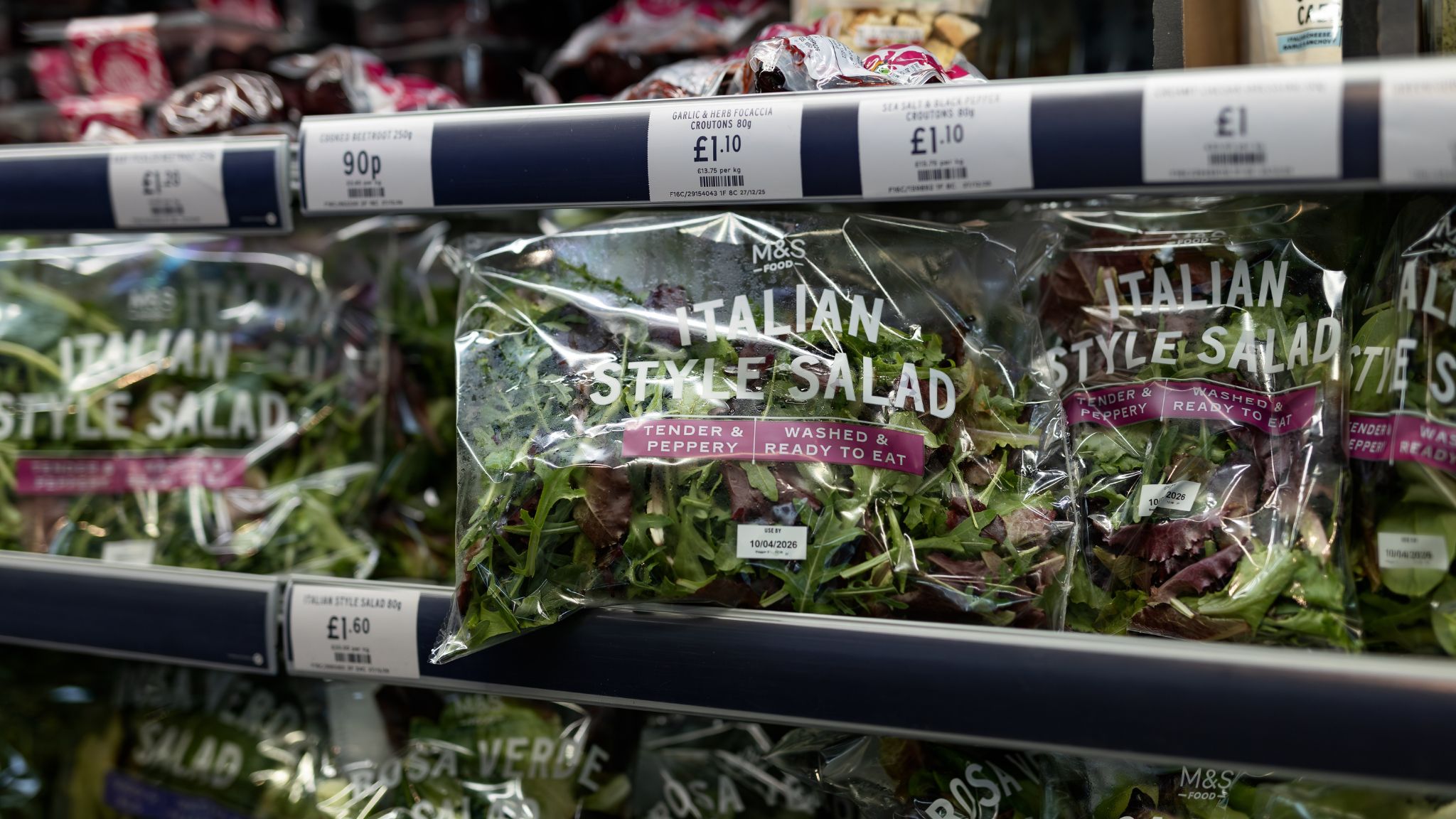
The disruption reaches the UK through a less obvious route as well. Most of the UK’s industrial carbon dioxide (CO2) is produced as a by-product of ammonia and fertilizer manufacturing, so when European production slows in response to Gulf supply shortages, industrial CO2 output falls with it. Industrial CO2 is used to slaughter most pigs and chickens; extend the shelf life of packaged meat, salad, and baked goods; and keep cold chains functioning. A disruption to fertilizer supply, which sounds like (and is!) a problem for food production, is also a problem across the wider food supply chain.
“Contingency as a substitute for capacity”
Government contingency planning, reported earlier this month, models a reasonable worst-case scenario in which UK industrial CO2 supplies fall to 18% of current levels. The Cobra exercise has reportedly drafted emergency legislation to compel factories to redirect production towards CO2, and the Ensus plant in Teesside has been restarted for three months to maintain supply.
Measures like these keep a system functioning through an acute episode, but they are not adjustments to the underlying structure. When the Hormuz blockade ends, the Ensus arrangement will lapse, and emergency legislation will no longer be needed. The structural features that made the disruption consequential in the first place will almost certainly remain in place. Crisis tends to produce this kind of response, without building permanent capacity to address the next one.
A need to look deeper?
The UK food system has many vulnerabilities. Some, most recently illustrated by the war in Iran, are concentrated, lodged at specific points where a small number of facilities, routes, or platforms carry a disproportionate share of food system function. However, some of the most critical issues are also the most diffuse, such as rising household food insecurity and worsening ecosystem health. The concentrated vulnerabilities get the attention of newspaper headlines when a crisis occurs, and they’re what short-term contingency planning addresses—but this is not the same as addressing the system’s overall fragility.
Tracing the fragilities beneath the headlines
Faced with crisis, we instinctively try to focus on the trigger. For example, with the Russian invasion of Ukraine or the war in Iran, the problem we see is geopolitical. Heatwaves or floods that destroy harvests point to climate change. Or a cyberattack that takes out a retailer’s payment system illustrates the fragility of digital infrastructure. But our research identified a set of conditions that runs through all of the crises: declining ecosystem health, supply chain logistics built for efficiency rather than endurance with little or no slack, and a growing share of the population already unable to afford healthy food before any shock arrives. The 15 scenarios we identified all point to the same underlying fragilities and insufficient buffers to shore up just-in-time supply chains, market concentration, and household food insecurity.
One of the less intuitive findings from the research is that food price shocks don’t map neatly onto production shocks. Prices can surge driven purely by sentiment, through market panic sparked, for example, by a government that impulsively imposes trade restrictions. The system’s own reactions can be as destabilizing as the events that provoke them.
Conventional risk assessments tend to model shocks in isolation. A system with few or failing buffers turns every disruption into an emergency.
Watching the buffers get thinner
A food crisis can occur when supplies run out, or simply when enough people believe that supplies might run out. A lack of confidence might better define a food crisis than the physical absence of food. This insight explains why the present moment warrants more concern than we seem to give it. COVID-19 already demonstrated this principle: empty supermarket shelves were a result of purchasing patterns that changed overnight in response to perceived scarcity. The episode showed how much of the food system’s apparent stability depends on the belief that it will hold together.
The conditions that might amplify a lack of confidence and turn concern into crisis have only increased in the last five years. In the UK, 1 in 7 households is food insecure, and demand for emergency food aid has increased by 94% over the last 5 years. For a significant share of the population, every price rise reduces the buffers they previously relied on to absorb temporary disruptions. Public trust in government and institutions has been declining for over a decade, which means each intervention starts from a weaker baseline of credibility than the last. Furthermore, food insecurity’s well-documented mental health consequences also contribute to the challenges: stressed households behave less predictably under new pressures.
The cumulative effect is that the system meets each new shock from a weaker position than the one before. Each of the recent disruptions—from the pandemic to the war in Ukraine, cyberattacks on retailers, and now the disruption to shipping through the Strait of Hormuz—has drawn down capacity in the system, and it’s not obviously being rebuilt. Energy and food costs remain above the pre-2022 baseline and continue to rise. None of these shocks has broken the system on its own, but each has left it with fewer reserves to meet the next one. What looks from the outside like a sequence of separate crises is, from the inside, a steady erosion of the system’s capacity to absorb disruption at all.
Looking ahead: The scenarios to come
Our research set out to map how a food crisis might unfold in the UK over the coming decades. Within two years, most of the pathways described in that work have been activated at some scale. The alignment between what experts anticipated and what occurred, along with the speed at which this unfolded, shows how well the underlying conditions were already understood by people working inside the food system.
The last two years have added a clearer view of what happens when crises accumulate. Capacity to withstand shocks and bounce back has been reduced in household budgets, public trust, and the many other buffers that used to absorb the effects of disruptions. Each episode—Covid, drought/deluge extremes, Ukraine, trade tariffs, the blocking of Hormuz—looks separate from the outside, but from inside the system, they look like accumulated risk. The Iran war is only the most recent accumulation point, and contingency planning around it shows how much of the response happens in the moment of the crisis itself, and how much of the work to build lasting capacity is needed outside it. These weaknesses were identified by numerous experts across the food system. Listening to them still offers an opportunity to make desperately needed improvements across the system in targeted, structural, and long-lasting ways.
I write about the future of food and the connections between our food systems, the environment and public health. Sign up for my newsletter.
You can also read more here.