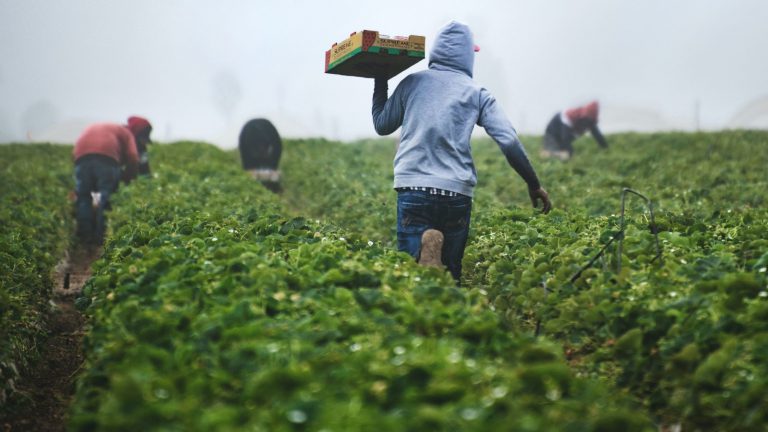
Yesterday the Right to Food Commission launched A Roadmap to Delivering Food Security for All by 2035 in Parliament. A week before the Budget, its chair, Barrie Margetts, said that the prime minister is “tinkering with small changes” when the country needs a “major reset.”
Just a few weeks earlier, Andy Burnham gave his first Labour Party conference speech as prime minister. He said that “everyone is talking about how life is too expensive” and promised to put energy, water and housing “back under stronger public control”.
Food belongs on that list. For the poorest tenth of households, food takes around 16% of weekly spending, more than gas, electricity and water combined. Only rent takes more. It’s as essential as any of these, and households compromise on it to pay rent and utility bills. Yet no part of government is responsible for whether households can afford to eat.
The Right to Food Commission grew out of 10 years of campaigning that began with football fans in Liverpool collecting food for local families. After hearing from more than 660 people across the UK and pulling together the wider evidence, it is asking government to take responsibility for food insecurity. This article looks at what that would involve, and how to ensure the aim is not just enough affordable and accessible food, but also sustainable and healthy food for all.
Food is the essential item that households cut first
Unlike rent or utility bills, spending on food can be cut by buying less or cheaper, so it is the first thing households reduce when money is short. In March 2026, 52% of adults surveyed by the Food Standards Agency in England, Wales, and Northern Ireland said they had cut down on how much food they bought in the past month to save money. “Rent eats first”, one participant told the Commission.
Is it any wonder then that, in 2024, 14.1 million people in the UK, including 3.8 million children, lived in households that experienced food insecurity, according to Trussell. The Commission report identifies four factors that drive household food insecurity: income, the cost of other essentials, the availability of affordable food and housing locally, and debt. Together, they determine a household’s residual income—the money left to buy food.
Yet increases in income meet what the Commission report calls the “absorption effect”: a rise is swallowed by the growing cost of another essential before it increases the food budget. For example, in April the standard allowance of Universal Credit rose by about £25 a month for a single adult aged 25 or over. Meanwhile, over the year to August, average private rent rose by £52 per month, while the housing allowance that helps low-income tenants stayed frozen. The rent increase was about twice the benefit increase. The prime minister’s cut in VAT on electricity, in force since 1 October, saves households an average of £45 a year, which is less than one month of that rent increase.
Ultimately, much of what determines whether a household can afford food lies outside food policy. The Food Ethics Council made this point in its evidence to the Commission: “the right to food is everything to do with food but not only to do with food”.
Nobody holds responsibility for food insecurity
Among Andy Burnham’s stated essentials, a government department and a regulator oversee energy, while housing has a department, and water a regulator. They can be held to account for what households pay. But in 2020 a mapping by the Food Research Collaboration counted some 16 departments and other public bodies with responsibility for food policy in England alone, and a CCRI article concluded that “no dedicated department, senior minister or overarching body exists to coordinate food policy”. Six years on, the Commission’s report finds the same picture of widely dispersed responsibility and no single institution responsible for ensuring people can afford to eat.
The Commission report asks for two things. First, it calls for a legal right to food, making government the duty bearer. A common question about embedding a right to food in law is what a legal responsibility would add. Essentially, law would make the duty binding, obliging the government to act regardless of which political party is in office and giving Parliament and the public a way to hold it to account. But a law does not deliver anything by itself. Making it work requires accountable institutions and transparent mechanisms.
That’s the report’s second call: for “household affordability governance”. This means a legal duty to monitor and improve household residual income; an independent body to forecast risks, as the Office for Budget Responsibility does for public finances; a check on new policies before they proceed; and a cabinet-level minister who answers to Parliament.
The report is less clear on which institutions would carry out these functions, and says more work is needed on that. The prime minister’s conference speech promised “the rewiring of the British state” and a 10-year plan to be published later this year, making this the moment to embed a right to food in that new approach.
Food needs a different approach from the other essentials
The Commission proposes three areas to focus on: an independently set minimum income, more public food provision through free school meals for every child and community kitchens open to everyone, and a review of how the grocery market is regulated. This looks quite different from the prime minister’s plans for the other essentials, which aim squarely at the price that households pay. Burnham has promised to lift the ban on public ownership of water companies, set up a publicly owned company to compete in the energy market, and start the biggest council-house building programme since the post-war era.
Why pricing interventions aren’t the starting point for food
Starting from the price doesn’t work for food because cheap food is part of the problem. According to the Food Foundation, healthier food costs nearly twice as much per calorie as less healthy food, so the most affordable food is often the least healthy.
The prime minister said in his speech that “we don’t let people sell food which damages health”, which is true from a food-safety perspective, yet the Food, Farming and Countryside Commission estimates the cost of diet-related ill health at £298 billion a year. Low food prices also come at a cost elsewhere: the Fabian Commission on Food and Poverty concluded that they are kept down at the expense of the environment, public health and working conditions in the food supply chain. That’s why the Commission’s proposals start with incomes, so people can afford a healthy diet at the same time as food prices reflecting what it costs to produce well.
Food production and land use need to be factored in
The report says much less about how food is produced, because the Commission chose to focus on household food insecurity rather than national food security. The Food Ethics Council’s evidence encourages a right to food built on “good food, for everyone, forever”, where “forever” means producing food within nature’s limits, which it notes is too often neglected. This bears on affordability, too: climate change added £361 to the average household food bill across 2022 and 2023, according to the Energy and Climate Intelligence Unit. A right to food that relies on the current food system will become harder to deliver as the climate changes.
Making that right truly and sustainably deliberable, now and in the future, means changing how we farm, use land, and eat. Public purchasing is one place to start. The Commission report estimates the cost of free school meals for every child to be about £4.7 billion a year, and the prime minister has promised to change government procurement “so that it backs British business”. If the food in those meals came from more local, sustainable producers, it would support local economies, shorten supply chains, and make the UK more resilient to shocks.
Food belongs on the list
Food should be on the prime minister’s list of essentials, with government responsibility for whether households can afford it. The approach must differ from water, energy, and housing, where the government intends to act on price. For food, it needs to start with incomes so people can afford a healthy diet, and with public provision that supports a food system able to keep supplying it.
The nearest thing to a government response on the report so far came at PM’s Questions the week before the launch, when Burnham praised the Right to Food campaign led by the Commission’s vice-chair, Ian Byrne MP, and pointed to free school meals for half a million more children and more money for breakfast clubs. He’s said nothing about a right to food.
The Budget on 28 October is unlikely to make a start. The Resolution Foundation estimates the Chancellor’s headroom has halved since March to £12 billion, and the debate ahead of the Budget is focused on how to rebuild it, with nothing on linking benefits to the cost of essentials. So looking beyond the Budget, the 10-year plan due later this year is where food could be written into the “rewiring of the British state”. Getting food into that plan will require making the case easy to say yes to. It’s popular: half of adults cut back on food this year, and the prime minister has built an agenda around how expensive life has become. It pays, because the country already spends £298 billion a year on the consequences of diet-related ill health. It’s on message, fitting the approach Burnham has set out, from public control of essentials to procurement that supports British business. The task now is demonstrating that the Commission’s proposals are the obvious choice for the new plan.
I write about the future of food and the connections between our food systems, the environment and public health. Sign up for my newsletter.
You can also read more here.