Who should assess the evidence on what the world grows and eats? There is no agreed answer. In 2021, scientists advising the first ever UN Food Systems Summit raised the idea of an “IPCC for food”, modelled on the Intergovernmental Panel on Climate Change (IPCC). Under the IPCC model, scientists write the assessments and governments edit and sign off the summaries. An open letter that same year, signed by more than 200 scientists, warned that such a panel would leave farmers and Indigenous Peoples without a say in the process. No panel was set up.
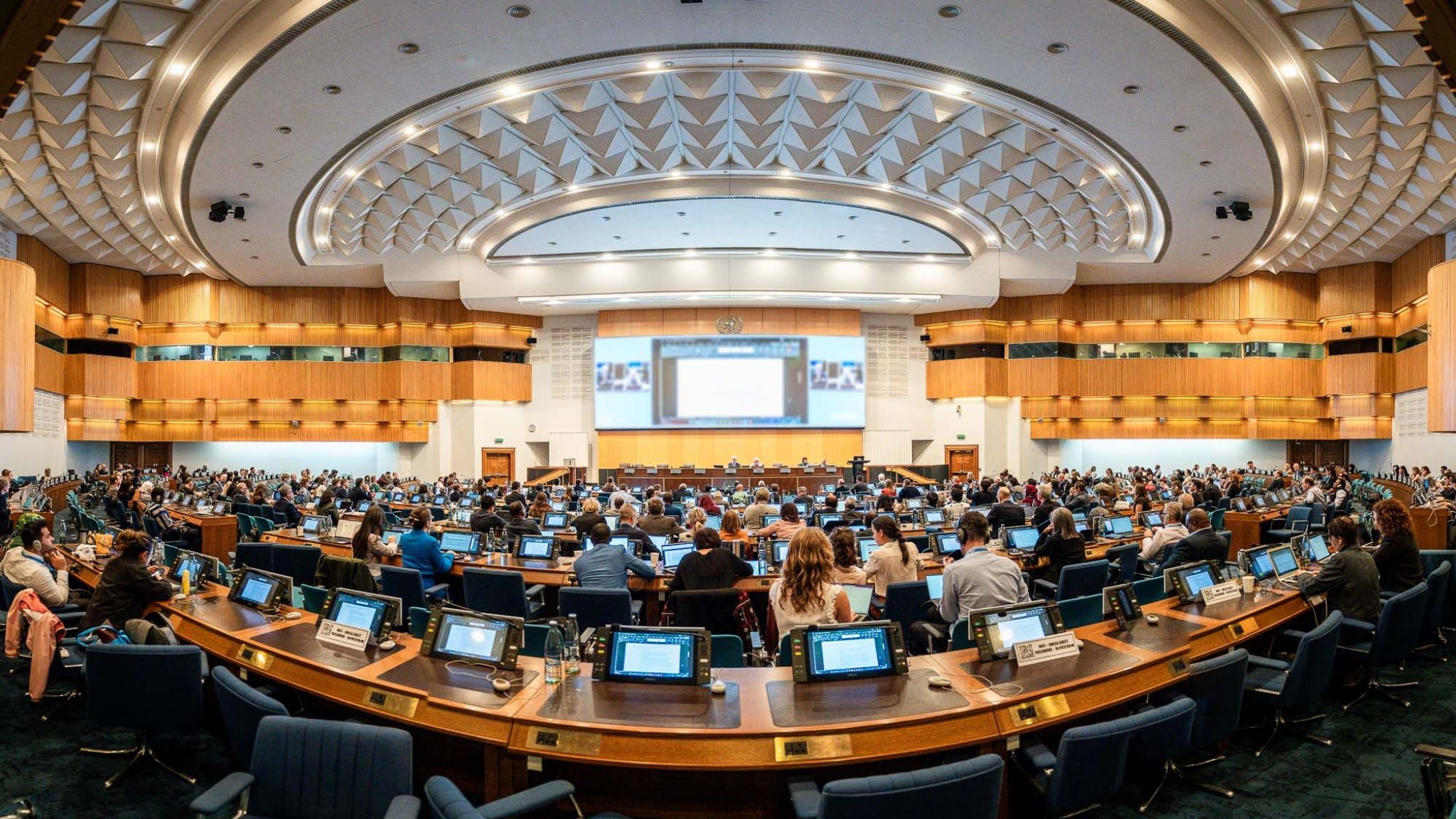
Five years on, the work of assessing the evidence on food is still divided. Governments agree international guidance at the UN Committee on World Food Security (CFS), which has its own panel of expert advisers. But the best-known scientific assessment comes from outside the UN: The EAT-Lancet Commission is a group of scientists funded by philanthropic foundations, and governments don’t sign off on any of what it says. However, the EAT foundation, which convened the Commission, published its closing message in April.
The conclusions of bodies like these inform what governments are asked to do, including at COP31—the UN climate conference due to end in Antalya on Friday—where food and climate concerns are increasingly converging. The level of influence of these bodies raises questions about justice. In March, I described four dimensions of food justice: who pays, who decides, whose knowledge counts, and what’s owed for past harm. These four questions are rarely all part of the conversation, yet are essential to just processes that last. In this article, I bring all four questions to bear on the international assessment of food, looking at what has been done on each and what’s still missing.
Who pays is on the agenda, but the answers are still incomplete
Distributional justice asks who benefits from change and who bears the cost. In January 2019, the EAT-Lancet Commission published the first global reference diet designed for human health within environmental limits. It had little to say about who would bear the costs of the changes it recommended. Later that year, researchers estimated that the cheapest version of that diet would cost more than the entire daily income of at least 1.58 billion people, most of them in sub-Saharan Africa and South Asia, and would require 89% of the average income in low-income countries.
By the time of the Commission’s second report in 2025, that criticism was reflected in a framework in which food justice had become a central pillar, alongside health and sustainability. The report set out three dimensions of justice: who receives benefits and bears costs, who has power in taking decisions, and whose knowledge and values are recognized (three of the four dimensions I mentioned above). It also traced more than 70% of the environmental pressure from food systems to the diets of the richest 30% of people.
That shift is also visible at UN climate talks. At COP30 last year, 43 countries and the EU signed a declaration linking climate action to hunger and poverty, and the conference adopted equitable access to adequate food as one of 59 adaptation indicators.
Still, neither effort binds anyone to action.
Diets also remain off the current COP’s menu. Food security is one of ten themes in the COP31 presidency’s action agenda, with a focus on resilient farming and water management. Comoros, a small island state, requested adding sustainable diets to the formal agenda, but withdrew the proposal before the agenda was adopted. Leaving diets out affects who pays. Environmental pressure from food can be reduced by changing what people eat and how food is produced. Yet if only production is discussed, the cost of change falls disproportionately on farmers, many of them in poorer countries.
Who decides: Those most affected only have a seat in one forum
Procedural justice asks who takes part in decisions, and with what power. Governments have addressed that question concerning food in the period after the 2007/8 food price crisis. In 2009, members of the CFS agreed on a reform that created a category of participants without a vote, who can speak in debates, help prepare agendas and documents, and submit formal proposals. Since 2010, civil society and Indigenous Peoples’ organizations have chosen their own representatives through an autonomous mechanism. Its 11 constituencies include smallholder farmers, fisherfolk, pastoralists, Indigenous Peoples, and food workers. The reform also created the High Level Panel of Experts, which consults publicly on its reports.
The 2021 UN Food Systems Summit, organized outside the CFS, tested the arrangement with the idea of an “IPCC for food”. As I mentioned above, critics objected that the proposed panel would move scientific advice away from the principle of more democratic control and that food governance would be split into spaces a few powerful actors could dominate. IPES-Food, an expert panel, withdrew from the summit over these concerns.
Taking part in the existing arrangement also costs time and money. In May, the CFS’s bureau and advisory group were told of funding gaps for 2027 across the committee, its expert panel and the civil society and Indigenous Peoples’ mechanism. According to the meeting summary, the committee’s participatory model is at risk if interpretation and translation are underfunded. That gap is on the agenda when they meet again on 23 November.
The best-known assessment has no such arrangement. The EAT-Lancet Commission’s members were invited for their expertise, and its statement on independence says they worked without influence from funders or outside groups, with peer review overseen by the Lancet, a medical journal. A 12-month global consultation ran alongside the second Commission, with the stated aim of “increasing local legitimacy, buy-in and adoption of the Commission’s recommendations”. That independence protects the science from its funders, but it also means that the people the recommendations affect have no formal part in reaching them.
Whose knowledge counts: Recognized in reports, but less so in how they are made
Recognitional justice asks whose knowledge counts as evidence. This was central to the objection to and ultimate failure of an “IPCC for food” in 2021: a panel that privileged formal science over farmers’ and Indigenous knowledge would decide what counted as evidence. The first EAT-Lancet report received a related criticism, that a single global diet could not stand in for the diversity of different food cultures.
Both the Commission and CFS have since acted. The 2025 EAT-Lancet report made recognition one of its three dimensions of justice, and its summary presents the diet as flexible enough to fit local crops, cuisines, and cultures. The CFS’s expert panel has produced a report on Indigenous Peoples’ food and knowledge systems, which the committee discussed at its plenary on 19–23 October ahead of negotiating policy recommendations for its next session in October 2027.
The harder step is incorporating recognition into how an assessment is made. One critique argues that while the 2025 Commission names colonialism it doesn’t question its own biomedical framework, treating it as the only credible way of knowing about food and health. This keeps traditional and Indigenous knowledge at the margins. The CFS panel’s report shows a different way of working: several of the report’s eight authors are themselves Indigenous, and the report describes Indigenous Peoples’ knowledge systems as valid on their own terms.
What is owed: Past harm has been acknowledged, but repair is still to come
The final dimension, restorative justice, concerns acknowledging and repairing past harm. Acknowledgement has begun where the 2025 EAT-Lancet report traces some of the barriers that marginalized groups face due to colonialism, and says colonial histories should be considered when deciding equitable shares of environmental limits. The CFS panel’s report goes further by describing how colonialism dismantled Indigenous governance, land tenure, and the passing on of knowledge, and recommends securing collective territorial rights, including through rights of return, as part of the change needed.
Repair is less developed: the EAT-Lancet framework does not include it in its justice framework; the CFS panel can only advise, and its recommendation on territorial rights only becomes policy if governments agree to it in negotiations in the year ahead.
The disputes discussed in this article also concern that legacy: who can afford the recommended diet, who has the resources to participate, and whose knowledge gets included. Until these bodies deal with the legacy of past inequality, it will keep returning in arguments about who pays, who decides, and whose knowledge gets considered.
Food justice needs all four questions from the start
The question of who assesses the evidence on food is open: The EAT Foundation is closing, and the future of its Commission is unclear. At the CFS, governments will spend the coming year negotiating what to do with their expert panel report, while working out how to fill funding gaps.
The next global assessment of food should ask who pays, give the people most affected a part in decision-making, treat their knowledge as part of the evidence base, and acknowledge past harms from the beginning. In 2021, the objection to an “IPCC for food” was that it would leave farmers and Indigenous Peoples without a say in the process. That same food justice test applies to whatever comes next.
What do you think it would take for the people most affected to have a real say?
I write about the future of food and the connections between our food systems, the environment and public health. Sign up for my newsletter.
You can also read more here.